
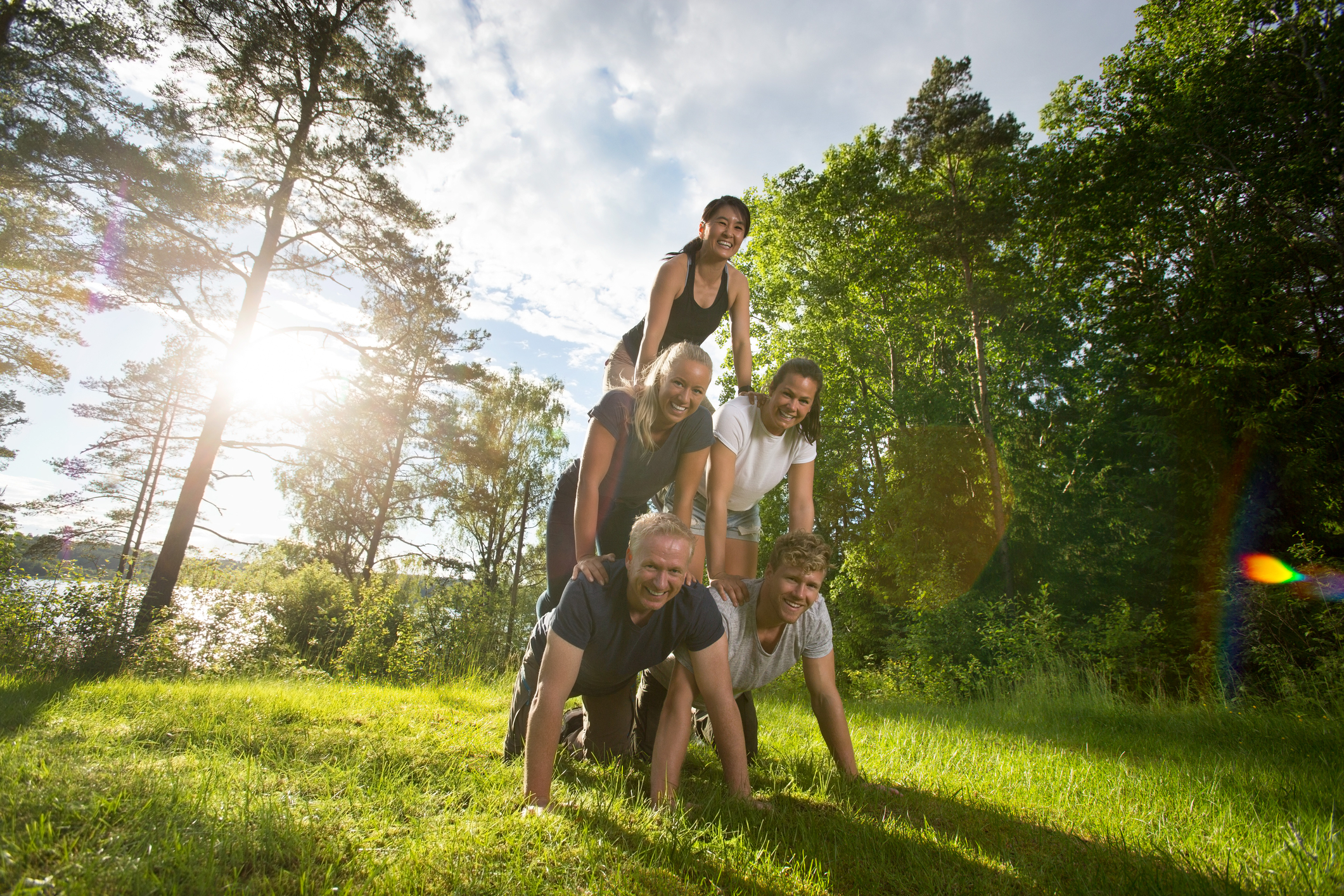
If you are trying to be resilient on your own, you are doing it the hardest possible way.
The development of Ubuntu Resilience — as both a theory and a lived practice — was the most critical step I took in settling into my life in the Netherlands as a 50+-year-old South African immigrant.
For the first three years after arriving in Amsterdam, I was deeply isolated. I worked remotely from a home office on a project based in South Africa. I was disciplined, focused and productive. I worked long hours, trained hard, and provided for my family. What I didn’t do was build a life outside my front door.
There was no time for hobbies, pastimes, or meeting people. I wasn’t even meaningfully exposed to anyone beyond my immediate family. Gradually, I became psychologically and physically depleted. Even my capacity to be present with my family began to erode.
What I was experiencing wasn’t loneliness in the poetic sense. It was functional isolation.
- I was productive
- Disciplined
- Providing
- Physically present
And quietly disintegrating.
This is a trap many high-performers fall into — particularly immigrants, expats, founders, remote workers, and men in their forties and fifties. There’s no visible chaos. No dramatic breakdown. Just a slow, almost invisible leak of energy, meaning and vitality.
And I didn’t fall apart because I was weak. During this period, I trained for and completed a full Ironman and a separate marathon.
I fell apart because humans are not designed to be self-contained systems.
At some point, I recognised the pattern. I began investing deliberately in the relationships already in front of me — my family, and the one meaningful friendship I had formed since arriving in Amsterdam. I also re-established a consistent physical routine that was no longer only about performance, but about regulation and wellbeing.
What surprised me was this: the more time I spent with other people — even when I genuinely didn’t feel like it — the clearer, stronger and more energised I became. As my energy returned, so did my interest in people. As my interest grew, so did my capacity for connection.
Most contemporary narratives around resilience glorify radical individualism: dig deeper, be tougher, be more disciplined. This has been popularised and romanticised by figures who celebrate suffering as a virtue.
My experience proved the opposite.
My resilience did not return when I optimised my schedule, sharpened my focus or worked harder. It returned when I stopped pretending that I was entirely self-sufficient. The breakthrough wasn’t tenacity or dogged persistence — it was connection, and the intentional strengthening of others.
It works much like physical training. The more consistently and intentionally you exercise, the more energy you have. And the more energy you have, the more capable you are of sustained effort.
Connection operates in the same way.
As my energy increased, I began spending more time with others. That led to new introductions, new conversations, and gradually, the emergence of a community — my people. People I enjoyed, respected, and who lifted me up. People who breathed life into the challenges and rhythms of daily living.
The shift was palpable: from hanging on by my fingernails, to surviving — and eventually — thriving.
I found myself living inside a positive feedback loop:
- Connection leads to Energy
- Energy leads to Capacity
- Capacity leads to Opportunity
- Opportunity leads to Belonging
- Belonging leads to Psychological safety and strength
- Safety and strength lead to Resilience
This is not a sentimental process. It is a neurobiological one.
Intentional social connection — particularly when oriented towards contribution and upliftment — regulates cortisol, stabilises nervous system tone, improves cognitive clarity, restores motivation, and reintroduces meaning.
I didn’t simply “become more social”. Internally, I stabilised. My nervous system stabilised. I stopped being consumed by my own survival and shifted my attention towards the wellbeing of others.
That is Ubuntu at a physiological level — not a philosophical one.
Importantly, this wasn’t a passive process of receiving support. I doubled down on contributing.
I was raised with the understanding that belonging is not passive and community is not something you consume. Support flows fastest when you initiate it. No waiting for rescue. No “waiting for Godot”.
My resilience returned as I became useful again — not while I was hiding or protecting myself.
And this is where Ubuntu is often misunderstood.
Ubuntu is not a “let’s all be nice” ideology, nor a sentimental call for harmony. It is pragmatic intelligence. At its origin, Ubuntu was not a moral position — it was a learned survival strategy.
In traditional African contexts, if the group fails, the individual dies. Resilience was always distributed, not personal. Strength was borrowed, shared and returned in order to replenish the collective. In doing so, both the group and the individual flourished.
As the saying goes: Umuntu ngumuntu ngabantu — a person is a person through other people.
Through this lived experience, Ubuntu became Ubuntu Resilience for me: I am resilient through the resilience of others. I am resilient because we are resilient.
Rebuilding my village after leaving South Africa forced a hard truth into the light: I could not regulate myself in prolonged isolation, and resilience cannot be sustainably rebuilt alone.
The first move is relational, not psychological.
Yes, I had to dig deep internally and break personal patterns. Growth requires discomfort. Isolation feels safer than connection when you are depleted — and that is the lie.
I didn’t wait until I felt like being with people. I learned that the moment you most need others is usually the moment you least want to see them. So I let go of comfortable reclusiveness and chose connection — even when I resisted it.
Because community building is not a feelings-based activity. It is a disciplined investment.
No person is an island. And those who try hardest to be usually drown quietly.
I tried the Western myth of self-reliance. It nearly broke me.
The village didn’t just save me.
It rebuilt me.
– Rienzo Colpo, Performance Mind