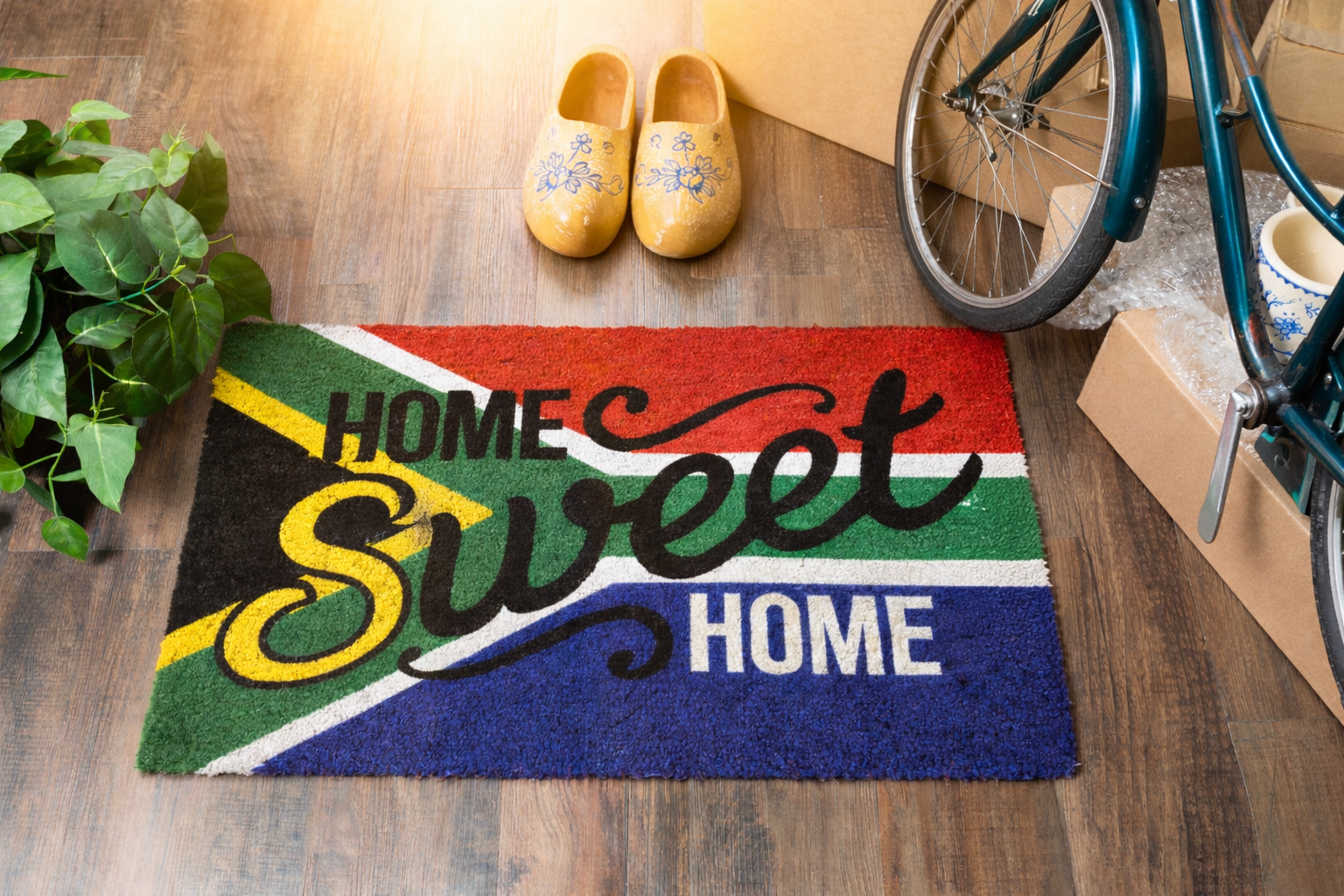
Relocating from South Africa to the Netherlands is often described as an opportunity — and it is. But it’s also a major life transition that impacts every part of your life: identity, routine, family, work, and the idea of what “home” means.
At Home.Made, we work closely with individuals, families, and organisations to help navigate this major milestone. What we see, time and again, is that relocation is not a single event. It’s a layered experience — practical, emotional, cultural, and deeply personal.
This is what that journey really looks like.
The Decision: Leaving What’s Familiar
For many South Africans, the decision to move is shaped by a mix of push and pull factors. Career opportunities, safety, education, quality of life, strong economy, or long-term stability often pull people toward the Netherlands. At the same time, the decision means leaving behind family networks, long histories, familiar systems, and a deeply rooted sense of belonging. Not to mention braais, Woolies, the beautiful Cape and biltong!
Even when the choice feels logical, it rarely feels simple. There’s excitement, grief, relief, fear — often all at once. Relocation begins long before the plane takes off.
Arrival: A System That Works — Differently
The Netherlands is known for its structure, efficiency, and organisation. Systems work. Processes are documented. Expectations are explicit. For many South Africans, this can feel both refreshing and overwhelming.
Everyday tasks suddenly carry weight:
- registering with the municipality
- setting up a BSN
- navigating health insurance
- opening bank accounts
- understanding housing rules
- finding a new home
- learning how appointments, waiting lists, and digital portals function
- using public transport and/or biking
Nothing is impossible — but everything is new. And because the systems are precise, small misunderstandings can feel disproportionately stressful.
At Home.Made, we see that the biggest challenge is not complexity — it’s context. Understanding why things work the way they do is just as important as knowing what to do next.
Cultural Shifts: Subtle, But Significant
Cultural adjustment in the Netherlands is rarely dramatic — but it is constant.
Communication is direct. Planning is precise. Privacy is valued. Social integration happens slowly and intentionally. For South Africans, who often come from relationship-driven, flexible, high-context environments, this shift can feel disorienting.
It’s not about right or wrong — it’s about difference.
Many new arrivals tell us:
- they feel confident at work, but unsure socially;
- they miss spontaneity and informal connection;
- they are surprised by how long it takes to feel “settled”;
- and they miss the predictability of knowing ‘home’ – the way supermarkets are organised, driving on the left, how much to tip, understanding cultural idioms and stable weather.
These experiences are normal. Integration is not immediate belonging — it’s gradual familiarity.
Work and Identity: Starting Again
Professionally, the Netherlands offers opportunity — but relocation often requires a recalibration of identity.
Titles don’t always translate. Experience may need reframing. Workplace norms differ. Hierarchies are flatter, feedback is candid, and independence is expected early on.
For accompanying partners, the transition can be even more complex. Careers may pause, shift, or restart entirely. This period of adjustment can quietly impact confidence and self-worth — especially for highly capable individuals used to operating at full momentum.
Home.Made works with both individuals and organisations to recognise these invisible transitions — because successful relocation isn’t only about employment contracts. It’s about people feeling anchored, capable, and valued again.
Building a Sense of Home
The concept of “home” changes during relocation.
At first, home is practical: finding a place to live, furnishing it, learning the neighbourhood, and understanding transport routes and local rhythms.
Later, home becomes emotional: routines, familiar cafés, seasonal rituals, friendships, and small moments of comfort.
South Africans often carry a strong sense of community and adaptability — qualities that help enormously in this phase. But even the most resilient people need time to land.
At Home.Made, we believe that relocation support should extend beyond logistics. Feeling at home is not accidental — it’s built intentionally, with the right guidance, context, and support.
Why This Experience Matters
Relocation success is often measured in paperwork completed and roles filled. But the long-term outcome depends on something deeper: whether people feel settled enough to stay, grow, and contribute fully to their new community.
When individuals and families feel supported:
- productivity increases;
- integration happens faster;
- wellbeing improves;
- retention strengthens;
- and communities thrive.
That’s why Home.Made exists — to bridge the gap between systems and people, between moving and belonging.
Making the Netherlands Feel Like Home
Relocating from South Africa to the Netherlands is not about becoming someone else. It’s about learning how to live well in a new context — while bringing your values, strengths, and identity with you.
At Home.Made, we help make that transition human, structured, and sustainable. Because relocation isn’t just about moving countries — it’s about building a life that works.
By Home.Made Bespoke Relocators